An Andalusian art in a Catalan city
Barcelona flamenco: a short history
Flamenco is Andalusian, so why does Barcelona have a flamenco scene? Carmen Amaya, Somorrostro, the Catalan rumba and what it means for a night out.
Book flamenco at Casa Sors ↗Quick answer
Flamenco developed among the Romani and Andalusian communities of southern Spain, and UNESCO lists it as intangible heritage. Barcelona's link is people and music: the dancer Carmen Amaya, whom Wikipedia places at birth in the city's Somorrostro district, and the Catalan rumba grew from Romani neighbourhoods shaped by Andalusian migration in the 1950s and 1960s.
Flamenco starts in the south
Wikipedia describes flamenco as an art form built on folk music traditions of southern Spain and developed within the gitano subculture of Andalusia. It joins song, guitar, dance, handclaps and footwork, and UNESCO inscribed it in 2010 as intangible cultural heritage. That is why guides to Barcelona flamenco must be careful: the art is Andalusian in origin, even when the stage is Catalan.
How it reached Barcelona
People carried it. The Catalan rumba article on Wikipedia says the genre grew in Barcelona's long-established Romani communities in Gràcia, the Raval and Hostafrancs, which were influenced by heavy Andalusian immigration in the 1950s and 1960s. Flamenco in Barcelona is therefore not an import for visitors; it belongs to families who have lived here for generations.
Carmen Amaya and Somorrostro
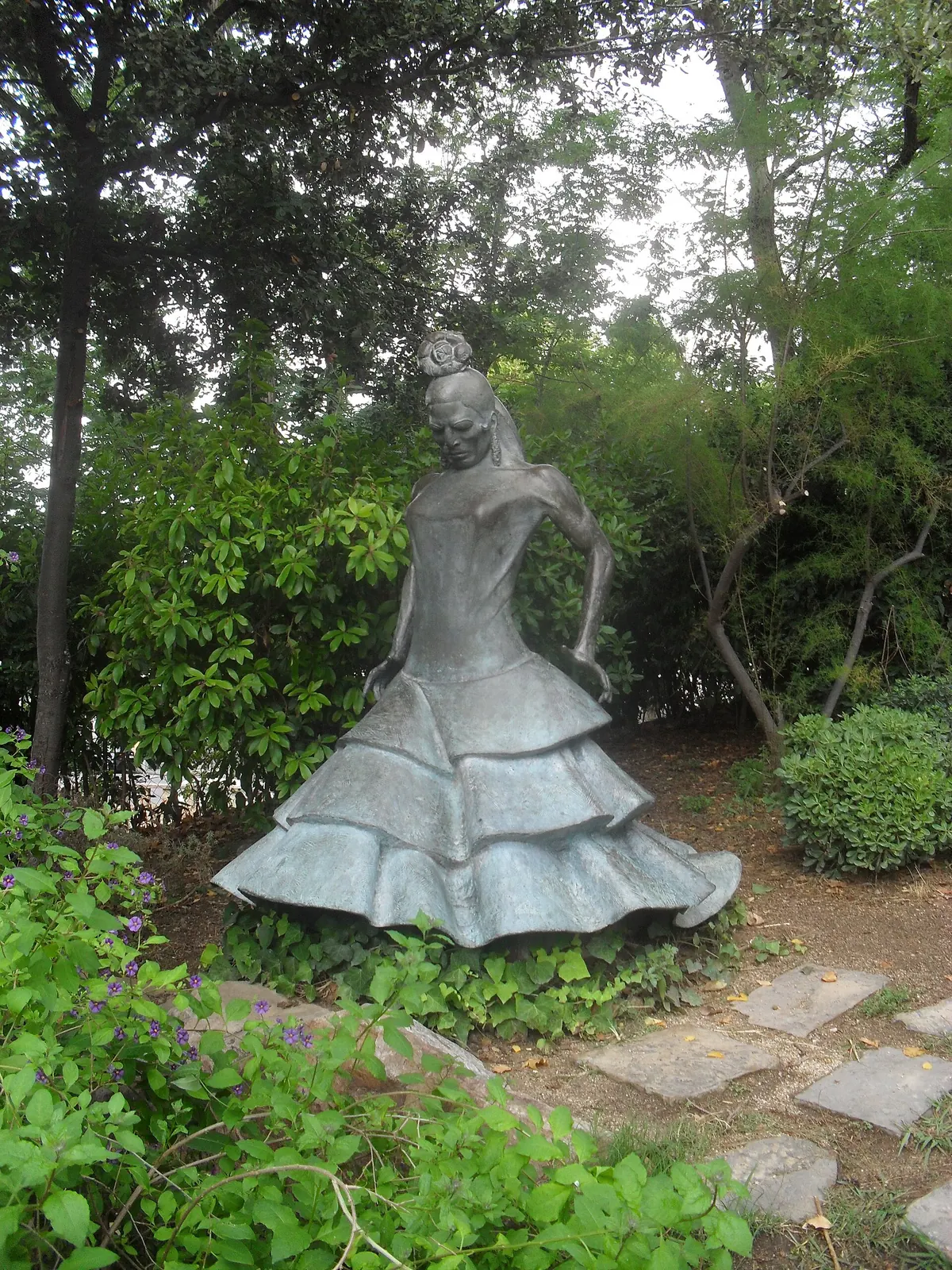
Wikipedia places Carmen Amaya's birth in Barcelona's Somorrostro district and says she is often hailed as the greatest flamenco dancer ever. She was the first woman to master the fast footwork that had been the preserve of the best male dancers. She debuted at a Barcelona theatre, and an art critic wrote about her in the weekly Mirador in 1931.
The Catalan rumba
The rumba catalana has rhythms derived from Andalusian flamenco rumba, with Cuban influences, and Wikipedia says it began in the city's Romani community from the 1950s. It is in four-four time with handclaps, guitar and percussion. Early artists named there include Peret and El Pescaílla. It is a reminder that flamenco kept changing once it reached Catalonia, and that the city shaped it too.
Flamenco on canvas
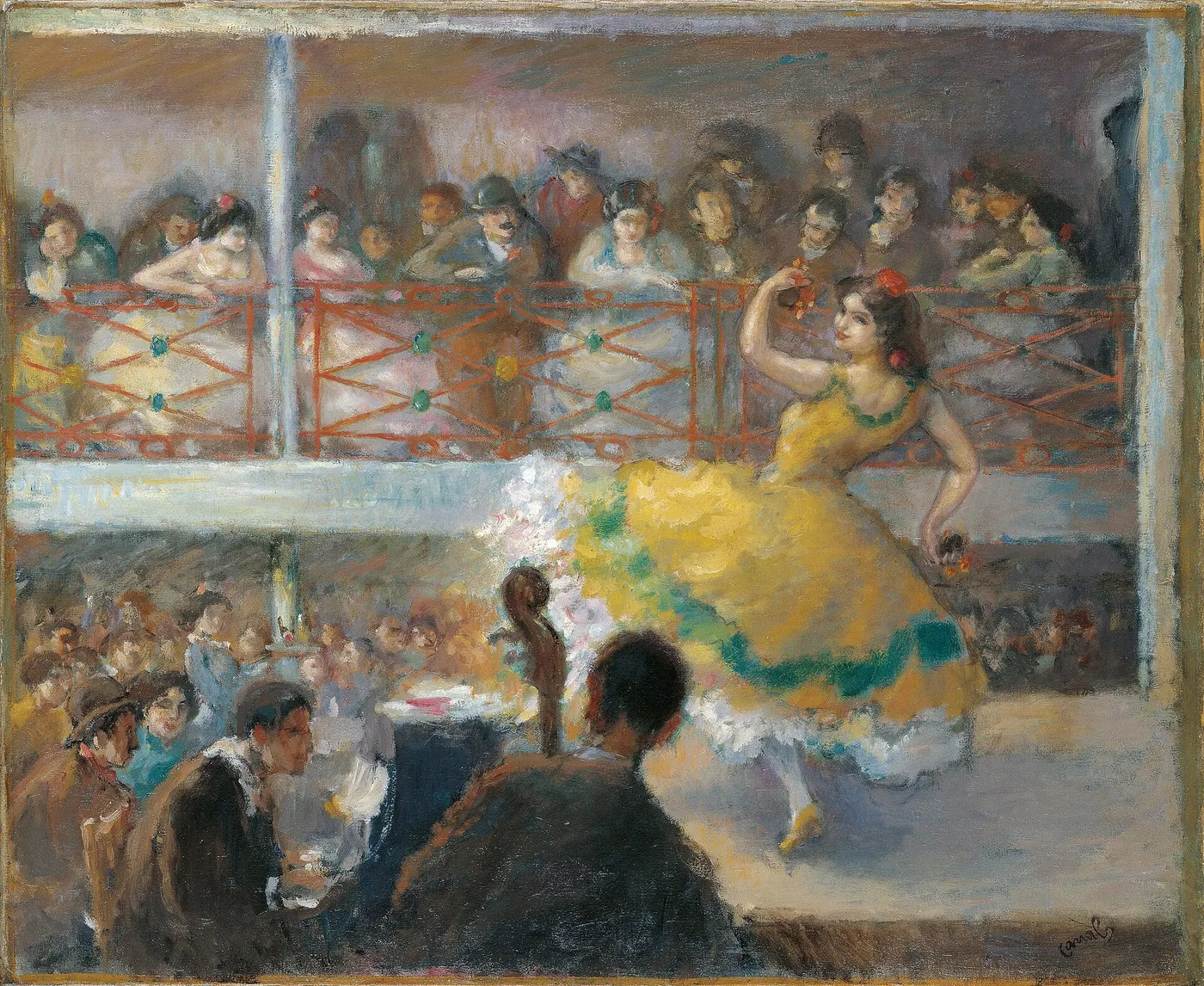
Painters recorded the scene as well. Ricard Canals, a Spanish Impressionist who lived from 1876 to 1931, painted a dancer in a yellow dress on a small stage, a canvas now in the Carmen Thyssen Museum in Málaga. Canvases like it show the same intimacy a small room offers: musicians close, an audience close, the dancer lit from the front.
The tablao arrives
The word tablao is the colloquial form of tablado, floorboard, and Wikipedia says tablaos grew up during the 1960s as heirs to the cafés cantantes where flamenco was once staged. Those venues usually serve drinks and sometimes tapas or a full meal. That is the setting in which most visitors meet flamenco, in Barcelona as elsewhere.
Where a small room fits
A studio room like Casa Sors continues that intimate tradition on a modern footing: a family-run house, an hour of dance, guitar and song, and a guitar museum for context. It is one of several formats the city offers, alongside theatres and dinner rooms, and it suits visitors who want to see how flamenco is made, not only what it looks like from a distance.
What it means for your evening
If you want to see flamenco as the art Andalusia made, any good show gives you that. If you want to see how a city absorbed and changed it, look for rooms where the artists live and work locally, and read the programme as a conversation between south and north. Either way, the voice, guitar and dance are the same three things, and a small room lets you hear all three.
Frequently asked questions
Is flamenco from Barcelona or Andalusia?
From Andalusia. Barcelona has its own flamenco history through Romani families, Carmen Amaya and the Catalan rumba.
What is the Catalan rumba?
A genre that grew in Barcelona's Romani community from the 1950s, with rhythms from Andalusian flamenco rumba and Cuban music.
Is Carmen Amaya from Barcelona?
Yes. Wikipedia places her birth in the city's Somorrostro district and ranks her among the greatest flamenco dancers.
Sources